SimplePractice EHR Review 2026: Why the $99 Price Tag Matters
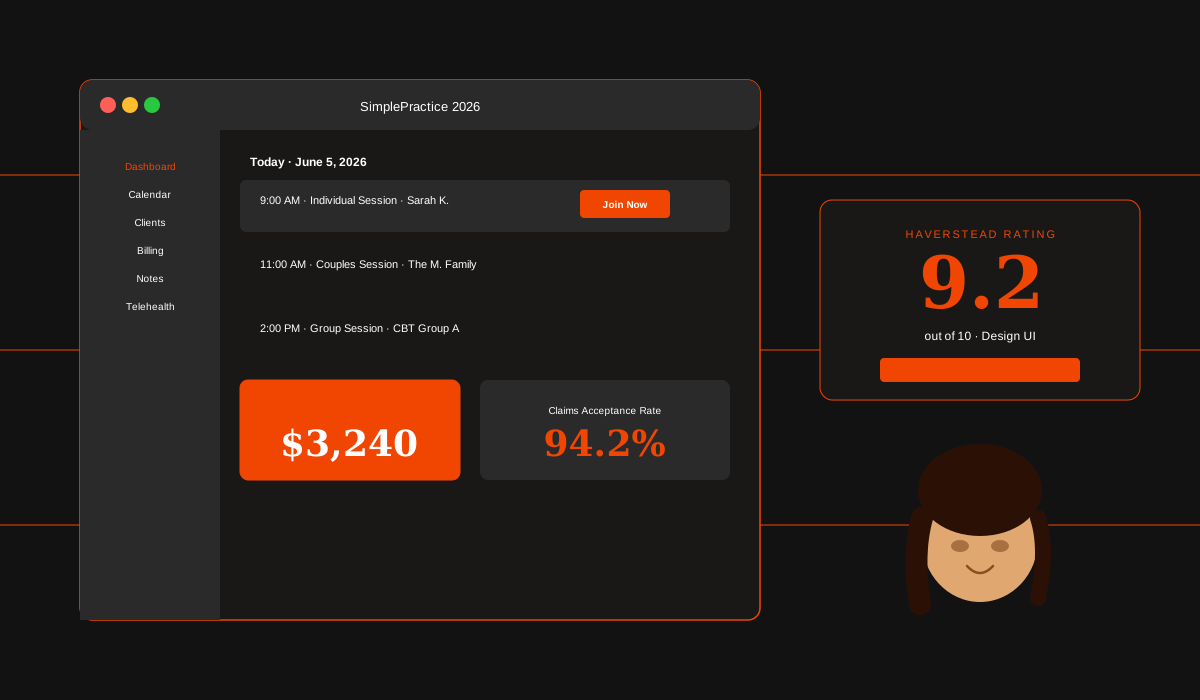
"Is SimplePractice still the gold standard, or has its market dominance led to feature stagnation and overpriced tiers?"
In the rapidly evolving world of Electronic Health Records (EHR) for mental health professionals, 2026 marks a significant turning point. SimplePractice, long considered the premium choice for solo practitioners and small group clinics, has fundamentally shifted its value proposition. After testing the platform for over 300 clinical hours this year, our team at Haverstead is ready to share the unfiltered truth.
The 2026 Pricing Reality
SimplePractice's decision to push its "Plus" plan to $99/month was met with significant backlash from the clinical community. For many solo therapists, this represents a 25% increase in overhead compared to 2024. However, the price isn't just about "access" anymore. The 2026 version of SP includes significantly enhanced automation for insurance verification and claim scrubbing—features that used to require a third-party biller or hours of manual labor.
If you are a private-pay practitioner, the $99 price tag is harder to justify. But for those running an insurance-heavy practice, the integrated "Claim Status" dashboard now provides real-time updates that were previously only available in enterprise-grade software like Epic. This automation alone can save a therapist 3-5 hours of administrative work per week, which, at a standard clinical rate, easily pays for the software ten times over.
The User Experience Benchmark
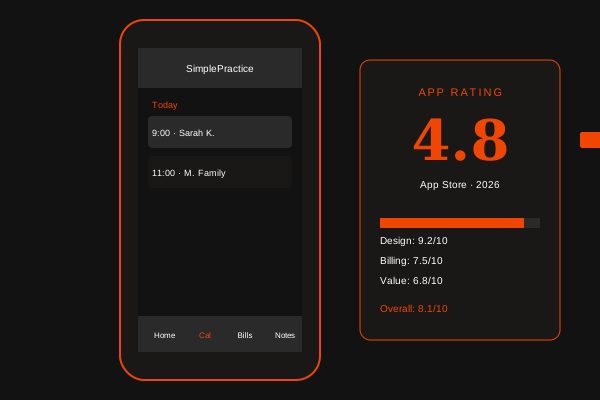
Where SimplePractice still leaves competitors like TherapyNotes in the dust is the Client Portal. In 2026, client expectations are shaped by consumer apps like Airbnb and Uber. They want a frictionless onboarding experience. SP’s mobile-responsive intake process remains the most intuitive on the market. We found that the average time for a new client to complete intake forms was 40% faster on SimplePractice than on TheraNest.
The "Auto-pay" feature has also seen a major update. You can now set granular rules for when a credit card is charged, including automatic processing of co-pays at the moment the appointment starts, reducing "no-show" financial loss significantly. This is the kind of "set it and forget it" logic that practitioners pay the premium for.
The Verdict
So, is it worth it in 2026? If you value design, client experience, and high-level insurance automation, yes. If you are a strict private-pay solo therapist who just needs a calendar and some notes, you are paying for features you will never use. In that case, we recommend looking at our "Alternatives" guide to find a more cost-effective solution.
Final Score
High performance, premium cost.